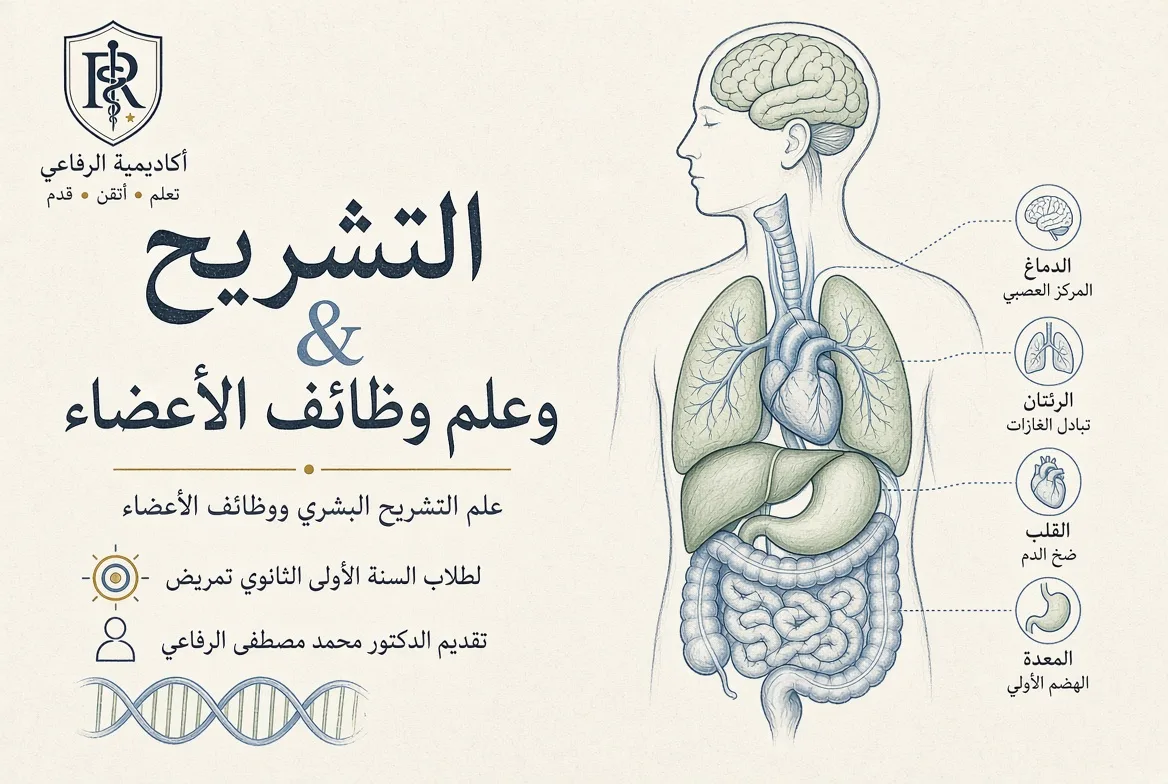
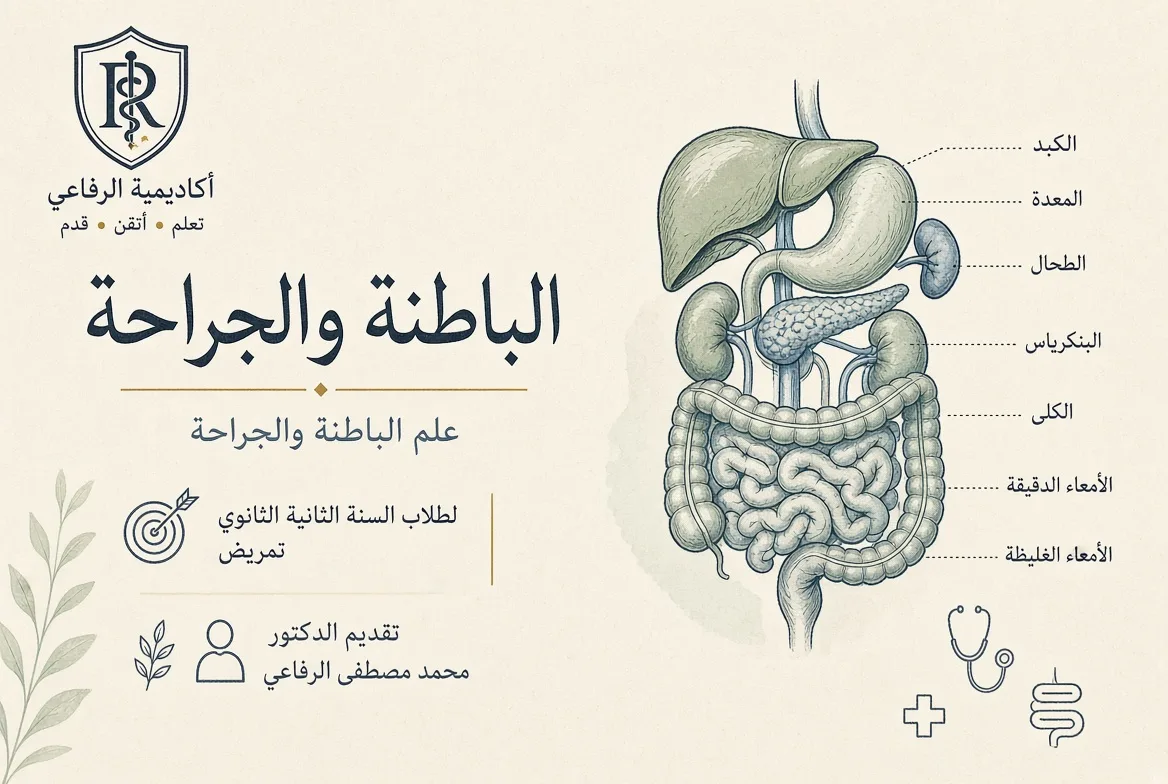
🩺 Anatomy and Physiology — First-Year Nursing Students
A comprehensive educational course designed specifically for first-year secondary nursing students in Egypt.
The course provides a clear, structured, and easy-to-follow explanation of Anatomy and Physiology, helping students understand the structure of the human body, how its systems work, and how different structures and functions are connected.
📚 What Does the Course Cover?
🦴 Part One: Anatomy
The Anatomy section focuses on the structure of the human body and its major organs and systems.
- 🦴 Bones and Skeleton: types of bones, parts of the skeleton, the skull, newborn skull, upper and lower limb bones, thoracic cage, vertebral column, and pelvis.
- 🧠 Nervous System: brain, spinal cord, meninges, and peripheral nervous system.
- ❤️ Circulatory System: heart, circulatory pathways, arteries and veins of the upper and lower limbs.
- 🟢 Lymphatic System: lymphatic vessels, lymph nodes, spleen, and thymus gland.
- 🫁 Respiratory System: nose, pharynx, larynx, trachea, bronchi, and lungs.
- 🍽️ Digestive System: mouth and teeth, esophagus, stomach, small intestine, large intestine, liver, biliary system, and pancreas.
- 🚻 Urinary System: kidneys, ureters, urinary bladder, and urethra.
- ♂️ Male Reproductive System: internal and external male reproductive organs.
- ♀️ Female Reproductive System: internal and external female reproductive organs.
- 🧪 Glands: exocrine glands, endocrine glands, and mixed glands.
- 🎀 The Breast: breast boundaries, internal structure, and external shape features.
⚙️ Part Two: Physiology
The Physiology section focuses on understanding how the human body works and how its different functions are regulated.
- 🔬 Functional structure of the cell.
- 💪 Importance and types of muscles and changes accompanying muscle contraction.
- 🧠 Functions of the spinal cord, reflex action, cerebrospinal fluid, and autonomic nervous system.
- ❤️ Nerves of the heart, heart rate, and arterial blood pressure.
- 🟢 Tissue fluids, lymph, and edema.
- 🩸 Functions and components of blood, plasma, red blood cells, white blood cells, platelets, blood coagulation, hemorrhage, blood transfusion, blood groups, and the Rh factor.
- 🫁 Mechanism and regulation of respiration and hypoxia.
- 🍽️ Digestion in the mouth, stomach, and small intestine, functions of the large intestine, and absorption.
- 🔥 Metabolism of proteins, carbohydrates, and fats.
- 🌡️ Regulation of body temperature and physiological changes in hot and cold environments.
- 🚻 Urinary system functions and the role of the skin in waste excretion.
- 💧 Distribution of water and water balance.
- 🧪 Endocrine glands, including the pituitary, thyroid, parathyroid glands, pancreas, adrenal gland, testis, ovary, and menstrual cycle.
- 👁️👂 Sense organs, including hearing, sight, taste, smell, and touch.
🎯 What Will You Gain From This Course?
By the end of the course, students will be able to:
- Understand the structure of the human body in an organized way.
- Understand the normal functions of its major systems.
- Connect Anatomy with Physiology rather than studying them as completely separate subjects.
- Build a strong scientific foundation for future nursing and medical subjects.
- Review the curriculum in a clear and structured manner.
- Prepare more effectively for academic study and examinations.
👨⚕️ Who Is This Course For?
This course is primarily designed for:
First-year secondary nursing students in Egypt, as well as students who want to build a strong and comprehensive foundation in Anatomy and Physiology.
Understand the human body first... and nursing becomes easier.